
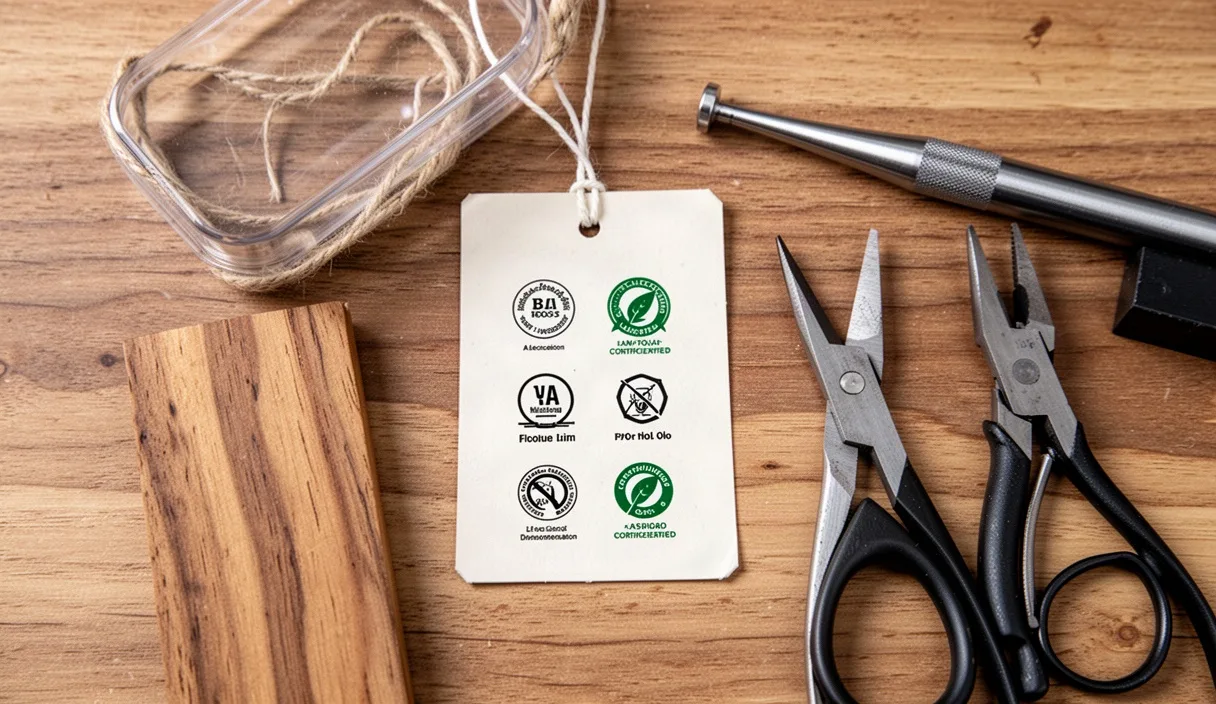
Greenwashing costs shoppers money and trust. A label that says "eco-friendly" without proof is marketing copy, not a fact. Spotting the difference takes less than two minutes once you know the patterns.
This guide breaks down the specific words, certifications and supply chain claims that separate real sustainability work from clever packaging. Use it before your next purchase, especially on anything priced like fast fashion but marketed like a conservation project.
Why greenwashing is common in fashion marketing
Fashion brands know sustainability sells. A 2023 survey by First Insight found that over 60% of consumers are willing to pay more for products from sustainable brands. That demand creates an incentive to claim sustainability without the cost of actually achieving it.
There's also no single global law standardizing what "sustainable" or "eco" means on a clothing tag. The U.S. Federal Trade Commission has Green Guides that discourage misleading claims, but enforcement is inconsistent and penalties are rarely severe enough to change behavior at scale. The EU has moved faster, with its 2024 Green Claims Directive aiming to ban vague terms without evidence, but it won't be fully enforced across member states until 2026.
Brands exploit this gap with low-cost tactics: a green leaf icon, a single recycled-material capsule collection, or a line like "committed to a better planet" printed next to synthetic polyester blends. None of these require third-party proof.
Vague terms that mean nothing
Certain words appear on tags because they sound responsible, not because they're regulated or measurable. Treat these as warning signs rather than facts.
- "Eco-friendly": No legal definition in most countries. Could refer to one material, one factory, or nothing verifiable.
- "Natural": Cotton is natural but can involve heavy pesticide use and high water consumption, around 2,700 liters for one t-shirt, according to the World Wildlife Fund.
- "Conscious": Popularized by H&M's "Conscious Collection," later criticized by the Norwegian Consumer Authority in 2021 for implying environmental benefits it couldn't substantiate.
- "Sustainable": A goal, not a certified status. Ask: sustainable compared to what baseline, measured how, verified by whom?
- "Green": Color association only. Carries zero technical meaning.
If a product page uses three or more of these terms without linking to a specific certification, material percentage, or data source, the claim is decoration, not disclosure.
Certifications that require verification
Not all sustainability labels are equal. Some require annual audits by independent bodies; others are self-issued by the brand itself. Learning to tell these apart is the single most useful skill in this guide.
| Certification | What it verifies | Third-party audited? |
|---|---|---|
| GOTS (Global Organic Textile Standard) | Organic fiber content and processing chemicals | Yes, annual |
| Fair Trade Certified | Labor conditions and wages at production sites | Yes, annual |
| OEKO-TEX Standard 100 | Absence of harmful substances in finished textile | Yes, per batch |
| Bluesign | Chemical use and resource efficiency in manufacturing | Yes, ongoing |
| Brand's own "eco seal" | Whatever the brand defines internally | No, self-issued |
Look up a certification's registry before trusting it. GOTS publishes a public database of certified facilities at global-standard.org. If a brand claims GOTS cotton but its supplier isn't listed, the claim doesn't hold up. The same applies to Fair Trade USA's public certificate search.
Watch for certification mimicry too: logos designed to resemble Fair Trade or OEKO-TEX but issued by the brand's own marketing team. A genuine certification mark will include a license number or batch code you can cross-check.
Checking a brand's supply chain transparency
Real transparency means naming factories, not just countries. "Made with care in Asia" tells you nothing. A brand committed to accountability will list specific manufacturing partners, often with city-level detail and sometimes factory names.
Patagonia publishes its Footprint Chronicles, naming individual factories and their locations. Everlane's "Factories" page lists specific partner names and photos. These are checkable claims. Compare that to a brand that only states "ethically made" with no further detail; there's nothing to verify.
Three questions to ask when reviewing a brand's transparency page:
- Does it name specific factories or only broad regions?
- Does it disclose wage data, even in ranges, or only use words like "fair"?
- Is the transparency report dated within the last 12 months, or is it a static page from years ago?
If a brand's most recent sustainability report is from 2019 and nothing has been updated since, treat current claims with skepticism. Supply chains change yearly; a static page suggests the disclosure was a one-time PR move rather than ongoing practice.
Red flags in sustainability marketing copy
Greenwashing often hides in sentence structure, not just vocabulary. Marketing copy that sounds specific but isn't measurable is a common trick.
- Percentage without baseline: "30% more sustainable" compared to what previous version, measured by what metric? If the brand doesn't answer, the number is filler.
- Single-item spotlighting: A brand highlights one recycled-polyester jacket while the remaining 95% of its catalog uses virgin synthetic fibers.
- Future-tense promises: "We aim to be carbon neutral by 2030" with no interim targets or public progress reports is a statement of intent, not a current fact.
- Nature imagery overload: Leaves, green color palettes, and words like "earth" or "pure" used to create an emotional impression without data behind it.
- Carbon offset reliance: Offsetting emissions through tree-planting programs doesn't reduce the brand's actual production footprint; it's a financial transaction, and the quality of offset programs varies widely.
A useful test: remove every adjective from the marketing paragraph. What's left? If nothing concrete remains, the paragraph was built on tone, not substance.
A quick checklist before trusting a claim
Run through this list in under two minutes before adding an item to your cart or believing a brand's sustainability page.
- Search the certification name plus "registry" or "database" to confirm it's real and current.
- Check if the brand names specific factories, not just countries.
- Look for a published date on the sustainability report; anything older than 12-18 months needs a second look.
- Scan for vague words ("eco," "conscious," "green") used without a linked data source.
- Ask what percentage of the full product line, not just one item, meets the claimed standard.
- Check for a Higg Index score, if the brand participates; it's a standardized tool used across the apparel industry to measure environmental impact.
If a brand passes four or more of these checks with specific, verifiable answers, the claim has more substance than the average greenwashed label.
Common mistakes
Shoppers often assume a single certification covers the entire product, when it may apply only to one fabric component, like the outer shell but not the lining. Read the fine print on the certification's scope.
Another mistake is trusting price as a proxy for ethics. Higher prices don't guarantee better labor practices or lower environmental impact; some premium brands mark up conventional materials under a sustainability label without added verification.
Finally, don't confuse recyclable with recycled. "This packaging is recyclable" describes a future possibility dependent on local recycling infrastructure, not a completed action. Recycled content should list an actual percentage, such as "55% recycled polyester."
Next steps
Start with one brand you already own clothing from. Pull up their sustainability page and run the checklist above. Note how many claims you can verify versus how many rely on vague language alone.
For bigger purchases, cross-reference certification numbers using the issuing body's public database rather than trusting the logo on the tag. If a claim affects a purchase decision over 100 dollars, five extra minutes of research is a reasonable trade.
If you're uncertain about a specific brand's labor or environmental claims and it matters for a business decision or bulk order, consult a sustainability auditor or a textile compliance professional rather than relying solely on marketing copy.