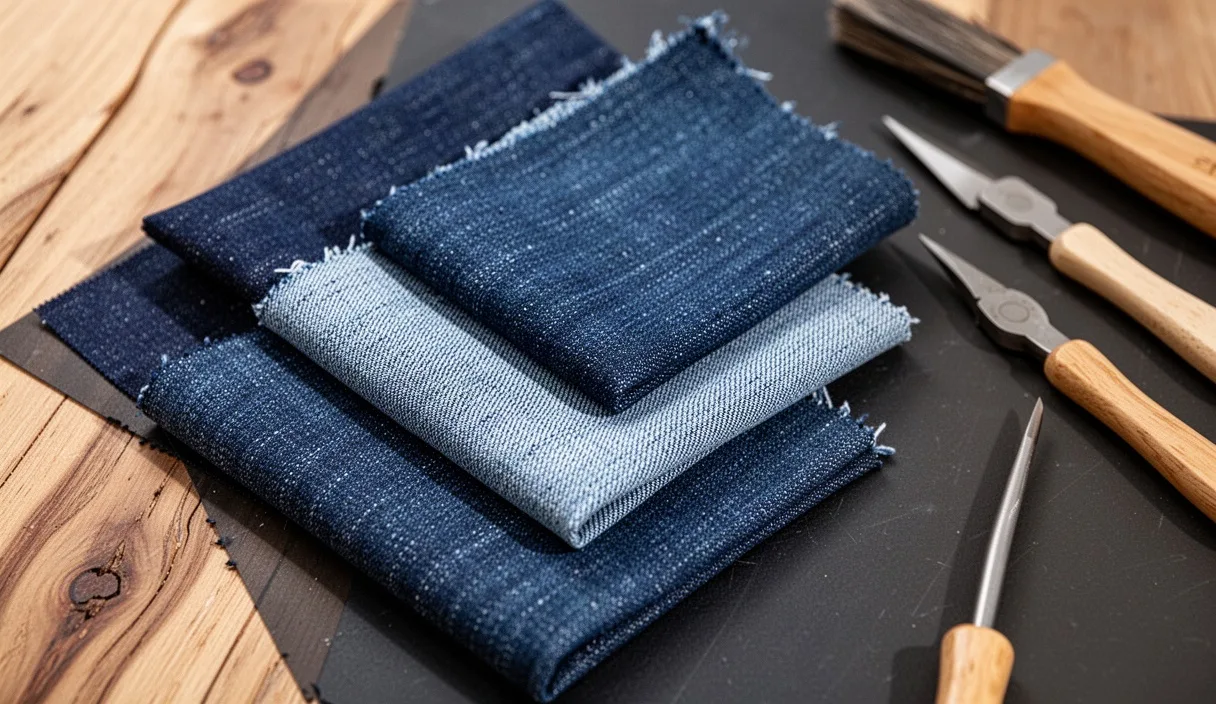
Denim weight tells you how much a square yard of fabric weighs, measured in ounces. That number predicts stiffness, warmth, durability, and how long a pair of jeans takes to break in. Most shoppers never check it, then wonder why one pair of jeans feels like armor and another feels like leggings.
The range runs from lightweight 5oz denim used in shirts up to 21oz denim sold mostly as a novelty by raw denim brands. For actual pants, 8oz, 12oz, and 16oz cover the practical spectrum most people will ever need. Here's what each one does, where it fails, and how to pick between them.
What denim weight actually measures
Denim weight is measured in ounces per square yard (oz/sq yd), sometimes written as oz/yd². A mill cuts a one-yard square of fabric, weighs it, and that number goes on the spec sheet. It has nothing to do with the size of the garment or how much the jeans weigh on a scale. A pair of jeans in size 32 and a pair in size 38 made from the same 12oz denim have the same weight per square yard, just more total fabric in the larger size.
Weight correlates with yarn thickness and weave density, not always with quality. A mill can make a thin, loosely woven 12oz fabric that falls apart in a year, or a tightly woven 12oz fabric that lasts a decade. Weight is a starting signal, not a guarantee. Still, it's the single most useful spec printed on a denim tag because it predicts how the fabric will behave before you've worn it once.
Construction matters alongside weight. Selvedge denim, woven on narrow vintage shuttle looms, tends to run denser per ounce than wide-loom projectile denim. So an 11.5oz selvedge can feel sturdier than a 13oz mass-market denim. Check the loom type and brand reputation, not just the number, when it matters for durability.
8oz denim: pros and limits
8oz denim sits at the light end of pants-weight fabric. It drapes closer to a chino than to classic Levi's 501s. Brands use it for warm-weather jeans, denim shirts, and summer jackets where stiffness and heat retention work against the garment's purpose.
The appeal is comfort from day one. There's no multi-week break-in period, no stiff waistband digging into your hip, no knees that crease like cardboard. 8oz denim softens almost immediately and moves with the body, which makes it a reasonable choice for travel, hot climates, or anyone who dislikes the "new jeans" stage entirely.
The tradeoff is durability and shape retention. Lightweight denim shows wear fast: thinning at the inner thigh within 6 to 12 months of regular wear, visible fading at stress points, and less structure holding the leg shape after washing. It's also less forgiving of fit mistakes since there's no substantial fabric to camouflage a baggy knee or a loose seat.
- Best for: hot climates, warm-weather travel, lightweight jackets and overshirts
- Typical lifespan: 1 to 2 years of regular wear before visible thinning
- Break-in time: minimal, often comfortable from the first wear
- Watch for: loose weaves that pill or develop holes at the pockets within months
12oz denim: the everyday standard
12oz is the default weight for most mainstream jeans, including the bulk of Levi's, Wrangler, and department-store denim. It balances comfort, structure, and durability well enough that most people never think about weight at all when wearing it, which is exactly the point.
At 12oz, jeans hold a crease, resist stretching out at the knee during a workday, and survive two to three years of weekly wear before the fabric visibly thins. The break-in period is short, usually a few wears before the fabric relaxes around the body, rather than the weeks some raw denim requires.
This weight also takes dye and fading patterns in a way that looks intentional rather than accidental. Indigo settles into the weave enough to produce visible whiskering at the hips and stacking at the ankle after 6 to 12 months, without requiring the months of deliberate wear that heavier raw denim needs to show the same effect.
| Weight | Feel | Typical use | Break-in |
|---|---|---|---|
| 8oz | Light, soft | Summer jeans, shirts | Almost none |
| 12oz | Medium, structured | Everyday jeans | A few wears |
| 16oz+ | Heavy, stiff | Raw denim, workwear | Weeks to months |
12oz denim is also the easiest weight to tailor. Most alteration shops stock thread and machines calibrated for this range, so hemming or taking in the waist rarely causes puckering or broken needles, issues that do come up with heavier fabric.
16oz and heavier: raw denim territory
16oz marks the entry point into what most denim heads call "heavyweight" territory, with some Japanese mills producing 18oz, 21oz, and even 23oz cloth as a showcase of weaving skill rather than daily practicality. At this weight, jeans stand up on their own when new, feel stiff against the legs for the first several wears, and can take 2 to 3 months of regular wear before the fabric relaxes into a comfortable drape.
The payoff for that discomfort is fading. Heavy raw denim, especially unsanforized or selvedge versions from mills like Japan Blue, Momotaro, or Samurai, develops deep contrast fades: honeycombs behind the knees, whiskers at the hips, and a stark light-to-dark gradient that lighter denim can't replicate as dramatically. Collectors chase 16oz and up specifically for this effect, often avoiding washing for 6 months or longer to maximize contrast.
Heavier denim also resists abrasion better. Work pants in 16oz to 18oz denim can last 5 years or more under daily physical labor, assuming the wearer repairs small tears before they spread. That durability comes with real cost in comfort: heavy jeans trap heat, making them a poor choice for climates above roughly 75°F for extended wear, and the stiffness can cause chafing at the inner thigh during the break-in period.
- Best for: cold climates, manual labor, denim enthusiasts chasing high-contrast fades
- Typical lifespan: 5+ years with occasional repairs
- Break-in time: 4 to 12 weeks of regular wear before comfortable
- Watch for: overheating in warm weather, and difficulty finding tailors equipped for heavy fabric
Matching weight to climate and use
Climate is the simplest filter. Anyone living somewhere with summers regularly above 85°F should default to 8oz to 10oz denim for daily wear, reserving anything heavier for a handful of cooler days per year. Someone in a climate with real winters, where temperatures drop below 40°F for months, gets more practical use out of 13oz to 16oz denim, which adds warmth without needing a second layer underneath.
Use matters as much as climate. Office or casual daily wear rarely benefits from anything above 12oz to 13oz, since the added stiffness doesn't translate into visible advantage in a desk-based routine. Manual labor, motorcycling, or outdoor work is where 14oz to 16oz denim earns its keep, resisting abrasion from falls, friction, or repeated kneeling in ways lighter fabric can't.
Travel is its own category. Pack 8oz to 10oz denim for trips where luggage weight and quick drying matter, since heavier denim can take 24 to 48 hours to fully dry after a wash in a hotel sink, while lighter weights dry overnight.
How weight affects break-in and fading
Lighter denim fades faster but with less contrast. An 8oz or 10oz pair might show visible fading within 3 to 4 months of regular wear, but the fade tends to look more like general lightening across the whole garment rather than sharp, localized contrast.
Heavier denim takes longer to show any change at all, often 4 to 6 months before the first visible whiskers appear, but produces sharper, more dramatic contrast once it does. This is why raw denim forums are full of people tracking "fade progress" at the 6-month and 1-year marks specifically for 14oz-plus denim, while lighter denim rarely gets the same tracking treatment since the payoff is smaller.
Washing frequency interacts with weight too. Heavy raw denim is traditionally washed as infrequently as every 6 months to preserve contrast, which only works because the dense weave resists odor and dirt better than lighter fabric. Lighter 8oz to 10oz denim needs washing every 1 to 2 weeks of regular wear to stay fresh, since the looser weave holds less structure against daily grime.
Common mistakes
- Buying heavy denim for a hot climate because it "looks more premium." Comfort loss outweighs the aesthetic gain for most people.
- Expecting instant comfort from 16oz+ jeans. Budget 4 to 8 weeks of stiffness before judging the fit.
- Washing raw denim too soon. Washing within the first month resets fading progress and can cause more shrinkage than expected, sometimes 3% to 10% depending on whether the denim is sanforized.
- Assuming higher weight always means higher quality. Weave density and yarn quality matter more than the number alone.
- Ignoring tailoring difficulty. Ask a tailor before buying 16oz+ jeans if hemming or waist adjustments will be needed; some shops charge more or decline heavy denim work.
Next steps
Check the weight on the inside tag or product page before buying, not after. Match it against the climate list above and be honest about how much break-in discomfort is tolerable.
For a first pair of raw or heavyweight denim, start at 13oz to 14oz rather than jumping straight to 16oz or higher. It's a smaller commitment in both cost and adjustment period, and it still delivers a visible fade pattern within the first year of regular wear.
If durability is the main goal, ask the retailer about weave type, selvedge versus non-selvedge, and sanforized versus unsanforized, since those factors affect longevity and shrinkage as much as the ounce weight does.