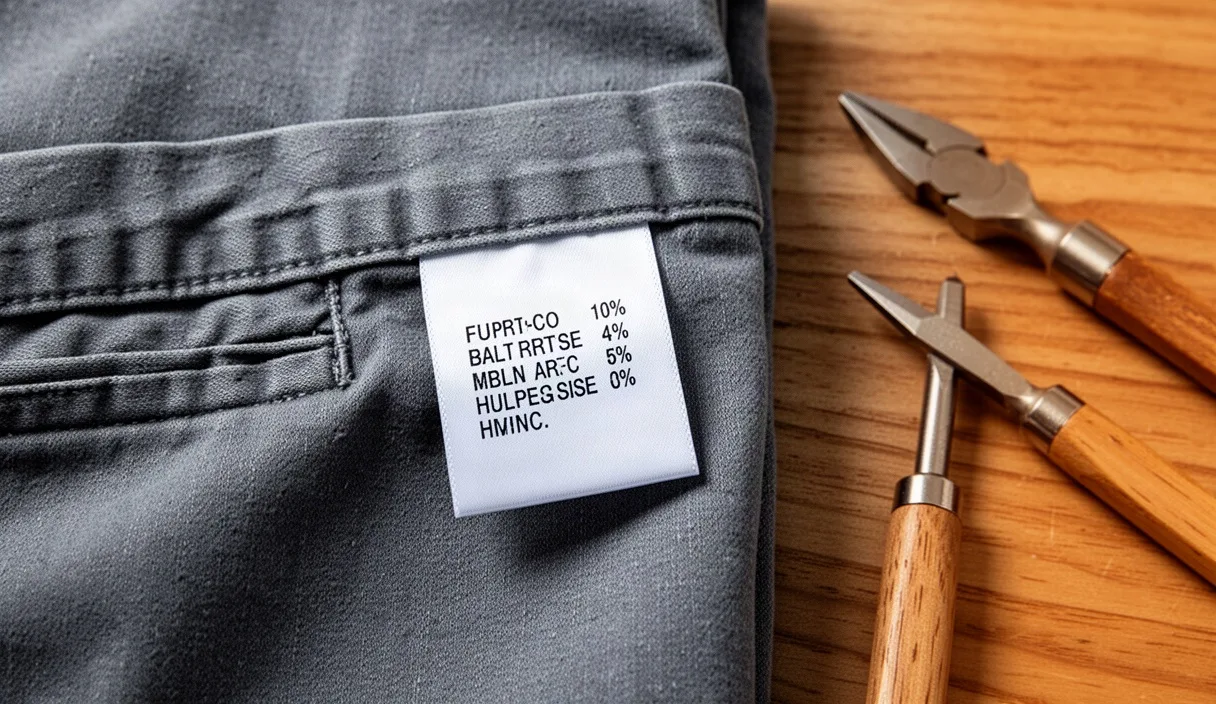
Fabric labels pack a lot into a few lines of text. Percentages, fiber names, care symbols. Most shoppers skip straight to the price tag and skip the composition line entirely. That's a mistake: the percentage breakdown tells you how a garment will wear, wash, stretch and age, often more accurately than the price does.
This guide breaks down what those numbers actually mean in practice: why blends exist, which ratios matter for durability, and how to read a label in under ten seconds at the rack. No brand loyalty talk, just the math printed on the tag.
Why fabric percentages are on the label
Composition percentages exist because of consumer protection law, not marketing. In the US, the Textile Fiber Products Identification Act requires manufacturers to list fiber content by weight, in descending order, down to the nearest whole percent. The EU has a similar rule under Regulation (EU) No 1007/2011. That's why a tag reads "60% cotton, 40% polyester" rather than vague terms like "cotton blend."
The order matters as much as the number. Fiber listed first makes up the largest share by weight, not necessarily the fiber that touches your skin or shows on the surface. A sweater can be "70% acrylic, 30% wool" and still feel wool-dominant on the outside because of how the yarns are spun, but acrylic is doing most of the structural work.
Weight-based percentages also explain why two shirts with the same blend can feel different. A 95% cotton, 5% elastane tee uses a different cotton grade and thread count than another shirt with the identical ratio. The percentage tells you the recipe, not the quality of the ingredients.
Natural fiber blends and what they signal
Pure cotton, wool, silk or linen at 100% is rare and usually priced accordingly. Most garments blend natural fibers with each other or with synthetics to fix a specific weakness; cotton wrinkles, linen creases hard, silk is fragile. When you see a natural-natural blend, it's almost always solving for drape, weight or cost.
Common natural combinations and what they're built to do:
- Cotton-linen (55/45 or 60/40): keeps linen's breathability but reduces the deep creasing linen does on its own. Common in summer shirts and trousers.
- Wool-silk (70/30 or 80/20): adds sheen and drape to wool suiting fabric, found in higher-end blazers and dresses.
- Cotton-cashmere (85/15 or 90/10): stretches cashmere's cost across a cheaper base fiber. The cashmere percentage is often low enough that softness gains are minor, so check if it's above 10% before paying a premium.
A practical rule: in natural-natural blends, any single fiber under 10% is mostly a marketing flourish rather than a functional addition. Ten percent cashmere in a sweater adds a little to the hand-feel but won't deliver cashmere's warmth-to-weight ratio. If warmth or softness is the reason you're buying, look for blends where the premium fiber sits at 30% or higher.
Synthetic blends: where they help and hurt
Synthetic fibers, polyester, nylon, acrylic, rayon/viscose, get added for durability, wrinkle resistance, cost control or stretch. They're not automatically worse than natural fibers; a 65% polyester, 35% cotton work shirt resists wrinkling far better than 100% cotton and will outlast it in a washing machine over years of use.
Where synthetic content causes problems is breathability and heat retention. Polyester and nylon don't absorb moisture the way cotton does, so in hot climates or for workout wear, high synthetic percentages (above 65-70%) can trap heat and feel clammy. For activewear this is often intentional, moisture-wicking fabrics push sweat outward rather than absorbing it, but for everyday clothing in warm weather, a high poly percentage is a comfort tradeoff worth knowing about before buying.
Rayon and viscose are technically semi-synthetic (made from wood pulp but chemically processed), and they behave unpredictably in blends. A 50% rayon, 50% polyester top will drape softly but may lose shape after a few washes because rayon fibers weaken when wet. Check the care label for hand-wash or cold-wash instructions whenever rayon appears above 40%.
| Blend | Typical ratio | What it's good for | Watch out for |
|---|---|---|---|
| Cotton-polyester | 60/40 to 50/50 | Wrinkle resistance, durability | Reduced breathability above 50% poly |
| Nylon-spandex | 80/20 to 90/10 | Stretch, shape retention | Heat retention in warm weather |
| Rayon-polyester | 50/50 to 70/30 | Soft drape at lower cost | Shape loss if washed on warm |
Elastane ratios and shape retention
Elastane (branded as Spandex or Lycra) rarely appears above 10% in woven garments because a little goes a long way. The percentage directly predicts how much stretch-and-recovery the fabric has, meaning how well it snaps back to original shape after stretching.
Rough guide to elastane content and behavior:
- 1-3% elastane: found in dress shirts and chinos. Adds slight give for comfort without changing the garment's structured look.
- 4-8% elastane: common in jeans and fitted trousers. Noticeable stretch, good recovery if cared for (avoid high heat drying).
- 9-18% elastane: typical in leggings, swimwear and compression wear. High stretch, but elastane degrades faster with chlorine exposure and high heat, so swimwear with elastane above 15% should be rinsed in cool water after pool or ocean use.
Elastane degrades over time regardless of percentage, heat from dryers and direct sun exposure breaks down the elastic fibers faster than normal wear does. A pair of jeans at 2% elastane that's been tumble-dried on high for two years will have less recovery than a 2-year-old pair line-dried the whole time. The percentage on the label is a starting point, not a lifetime guarantee of fit.
Wool and insulation blend thresholds
Wool content percentages matter most for warmth retention and itch factor. Pure wool (100%) insulates well but can feel coarse against skin unless it's a fine merino grade. Blending wool with synthetics or other naturals changes both comfort and insulation performance, sometimes for better, sometimes worse.
Key thresholds to know:
- Below 30% wool: insulation benefit is minimal. A coat listed as "20% wool, 80% polyester" is mostly a polyester coat with a wool-adjacent feel; don't expect true wool warmth.
- 30-60% wool: moderate warmth, common in mid-weight sweaters and blazers. Good balance of cost and performance for most climates.
- Above 70% wool: strong insulation, typical in winter coats and heavier knitwear. At this range, check whether it's described as "merino" or just "wool"; merino at this percentage will be noticeably softer against skin.
Wool-acrylic blends (common in budget sweaters) at something like 30% wool, 70% acrylic will look similar to higher-wool versions on a hanger but perform differently in cold weather: acrylic doesn't regulate moisture the way wool does, so you may feel colder once you start sweating slightly, like during a brisk walk. If a coat or sweater is specifically for cold-weather insulation, prioritize wool content above 50% where budget allows.
Common mistakes
Shoppers often assume the first-listed fiber is "mostly what I'm paying for" without checking the percentage next to it. A "cotton, polyester" blend with no numbers visible, sometimes cropped off on resale listings, should be treated as a red flag; ask the seller or check the manufacturer's site before buying.
Another frequent error is ignoring care labels paired with the fiber percentage. A fabric blend might handle washing fine, but a specific finish (like a wrinkle-resistant coating on cotton) can require different care than the fiber content alone suggests. Always read both lines together, not the composition in isolation.
Finally, people confuse "contains wool" with "warm." A coat at 15% wool and 85% polyester fill is not significantly warmer than an all-polyester version; the wool percentage there is likely for surface texture, not insulation. When warmth is the goal, check the percentage against the thresholds above rather than trusting the word "wool" on its own.
Next steps for checking labels at the store
Before buying, flip the garment and read the composition line first, before the price tag. If a blend has a fiber you specifically want (wool for warmth, elastane for stretch, cotton for breathability), confirm it clears the thresholds outlined above rather than assuming any amount counts.
For high-value purchases, winter coats, suits, swimwear bought for repeated pool or ocean use, it's worth asking a tailor or specialty retailer about how a specific blend performs over time if the label alone doesn't answer your question. They see repeat customers and returns tied to fabric performance and can flag blends with known durability issues.
Keep a mental note of ratios that have worked for you in the past; if a 95/5 cotton-elastane tee held its shape well over two years, that ratio is a reasonable benchmark for future purchases in the same category. Fabric percentages won't tell you everything about quality, but they're the most concrete, standardized piece of information printed on nearly every garment you'll ever buy.